Newsletter
Winter 2025
December 20, 2025

Momentum has grown across foster care agencies, with the Reckoning events prompting deeper reflection and internal change in how agencies support and stop harming families and children. Agencies have begun re-examining their own practices and embracing accountability.
In partnership with the City’s Commission on Racial Equity (CORE), we have continued advancing the efforts to create a Community-Led Accountability Council that will work towards developing a roadmap to end systemic harms caused by the Administration for Children’s Services (ACS).
In another important step towards the City acknowledging harm, Council Member Althea Stevens introduced a landmark resolution acknowledging the systemic racism and generational harm embedded in New York City’s family policing system, and is calling on NYC’s government to acknowledge these harms (Resolution 935).
More Family Court attorneys are challenging harmful judicial decisions through appeals, contributing to a shift towards greater scrutiny, fairness, and accountability.
Advancing a Vision for Community-Based Family Support
We continued to push for services rooted in communities, not ACS. This strengthens a citywide shift towards family-centered support including our proposal to create a Division of Family Well-Being.
Thanks for standing with us and with families.
With your continued support, we’ll build on this momentum in 2026. Together, we will keep pushing for policies, practices, community-driven solutions, and structural changes that uplift and protect NYC families and children, rather than surveil and separate them.
NYC Child Welfare Leaders Weigh In on Mayor-Elect Mamdani’s Early Moves–a recent imprint article highlights Mayor-Elect Mamdani’s newly formed 29-member Transition Committee on Social Services and offers early insight into the thinking on child welfare. While Mamdani has not yet publicly outlined a child welfare agenda, Narrowing the Front Door (NTFD) has already taken action. In August, NTFD submitted a proposal to the incoming administration for the creation of a Division of Family Well-Being within the New York City Department of Community Safety, and in the months since, that vision has continued to move forward. This proposed division would establish a central hub for family support programs outside of the Administration for Children’s Services (ACS). By separating family-strengthening services from an agency often associated with surveillance and child removals, families can seek help and resources without fear and anxiety. The overall goal is simple: strengthen family well-being and keep children safe with their families and in their communities.
Too often family hardship and poverty are met with investigations, separations, and punishment, rather than connection to trusted community-based supports. These harmful interventions disproportionately impact low-income Black and Latinx families. Now, a growing movement of advocates and researchers are calling for a new public health-driven approach that would prevent crises, promote healing, and build stability.
A Division of Family Well-Being would:

New York’s State Central Registry is meant to protect children, but State law currently allows anyone to call in an allegation of abuse and or neglect anonymously, which enables malicious or unreliable reports. While mandated reporters must provide their name and contact information, callers without mandated reporter status are not required to provide any identifying information.
Because state law also requires CPS (Child Protective Services) to investigate every allegation, no matter how weak, repetitive, or clearly a pattern of harassment. Anonymous callers can weaponize the system without consequences; and families pay the price through stressful, unnecessary investigations.
The fix is simple and powerful. The Anti-Harassment in Reporting Bill would require all callers to provide a name and contact information when making a report. This information would remain confidential and would not be shared with the public or accused.
By ensuring that child protective specialists can follow up with callers, this commonsense reform would:
Momentum Builds and the Language Matters
The bill passed both the Senate and Assembly and is awaiting Governor Hochul’s signature. The Governor has until the end of December to sign the bill. Please send a postcard to the Governor’s office today.
Learn more and Support:

On October 30, 2025, the NYC Council’s Committee on Children and Youth held a public hearing to examine the role and impact of Family Enrichment Centers (FECs). While these centers were created by ACS and designed to be welcoming, community-rooted spaces that support families through connection, resources, and culturally responsive programming, there are still many concerns about their effectiveness. Many families and advocates remain wary of any offerings from ACS altogether, underscoring the need for ongoing trust building and transparency by the agency. There are currently 29 centers citywide, offering workshops, information sessions, access to resources, and other informal programming(the hearing aimed to identify ways to improve the centers)When asked about advocates wanting family support disconnected from ACS, ACS Commissioner Jess Danhausser stated, “We are very open to a conversation about how this gets organized citywide, but there are a lot of complexities around funding and procurement and we have to make sure we don’t lose the quality for families as we build something and we are encouraging a comprehensive thinking as possible here.”
While the FECs are intended to be a resource for families, their connection to ACS makes some families fearful. Shalonda Curtis-Hackett, Community Outreach Coordinator, Family Defense Practice–Neighborhood Defender Services of Harlem, and Narrowing the Front Door (NTFD) steering committee member discussed what support outside of ACS could look like for families. “We are not looking to move from one overseer to the next, we are looking to create an office that is co-lead, designed, and sustained by community. Right now, FECs are not created equal, some are run by foster care agencies with budgets and then there are some that are doing their best with two people on staff. We want the office or agency to support and grow that, and we currently don’t see that under ACS right now. As a parent who has been impacted, when a family currently has ACS cases, FECs are not a place where they feel safe enough to go, they are worried that their current cases will explode into something else if they are in crisis,”Curtis-Hackett explained.
Joyce McMillan, Founder and Executive Director of JMACforFamilies recently published a video she created and narrated to illustrate how The Fourth Amendment Applies in Our School Too. In the video, McMillan explains what happens when school personnel report to ACS based on poverty's impact on the family and the unintended consequences that come along with it. The video gives an overview of how the
Constitutional Rights protected by the Fourth Amendment apply within school settings. Students retain certain protections against unreasonable searches and seizures while at school. According to McMillan “Every child has the right not to talk to Child Protective Services (CPS) agents and not to have their bodies inspected without parental consent or a court order.” In this video, McMillan explains some of the creative ways schools have begun to support and not report families, including providing information on local food pantries and installing onsite laundry facilities.
For more information, visit JMACforFamilies.org
If you or anyone you know has been experiencing food insecurity, there are several resources around the city that can and will assist you and your family.
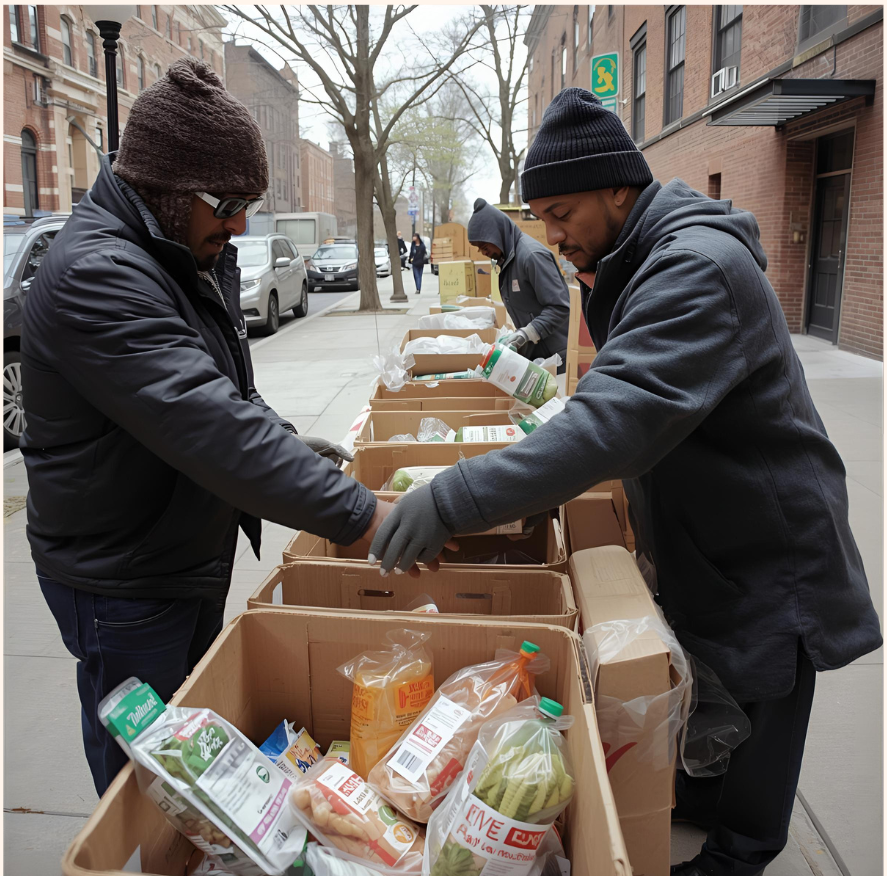
With the recent actions of the Trump Administration, many families were left without SNAP benefits and struggled to feed their families. Access to food is of the utmost importance, and knowing where and how to access it can be an issue in some underserved communities. Communities are coming together to assist one another with resources and places they can go to obtain food and other necessities. If you or anyone you know is in need of food assistance, here are a few Community Food Resources.
The Center for Family Representation (CFR) is also fighting to keep families together. When SNAP benefits are delayed and parents can't buy groceries, the family regulation system treats it as neglect. The consequence? Children removed from loving homes. 58% of their clients depend on SNAP. When benefits fail, they don’t. You can help support families by giving to CFR’s Client Emergency Fund, this fund provides families in crisis with basic necessities from food to warm blankets and more.

Every dollar you give is MATCHED:
Additionally, CFR pairs each family with an attorney and social worker, along with access to a parent advocate, because poverty is not neglect and families deserve support, not separation.

Narrowing the Front Door One Pager
The Narrowing the Front Door Workgroup has created a one pager to help you stay connected with our work and for you to share with others. This one pager provides information on what our core mission and impact is, who we are, how the work is done, and why we do the work. Scan the QR code to view the one pager.

On January 6, 2026 at The Sheen Center, Marty Guggenheim will debate Naomi Schaefer Riley on whether or not Government-run child protective services should intervene more in the lives of children. During the event, attendees will have the opportunity to ask questions and vote on the debate questions both before and after to see if their opinions change.
For the affirmative:
Naomi Schaefer Riley is a senior fellow at the American Enterprise Institute, where she focuses on child welfare and foster care issues, and a senior fellow at the Independent Women’s Forum. She is a former columnist for the New York Post and a former Wall Street Journal editor and writer, as well as the author of several books, including No Way to Treat a Child: How the Foster Care System, Family Courts, and Racial Activists Are Wrecking Young Lives.
For the negative:
Martin Guggenheim is the Fiorello LaGuardia Professor of Clinical Law Emeritus at New York University Law School and founder of the Family Defense Clinic. As one of the nation’s foremost experts on children’s rights and family law, he has published more than 50 articles and book chapters, authored five books, and successfully argued before the U.S. Supreme Court.
Learn More:
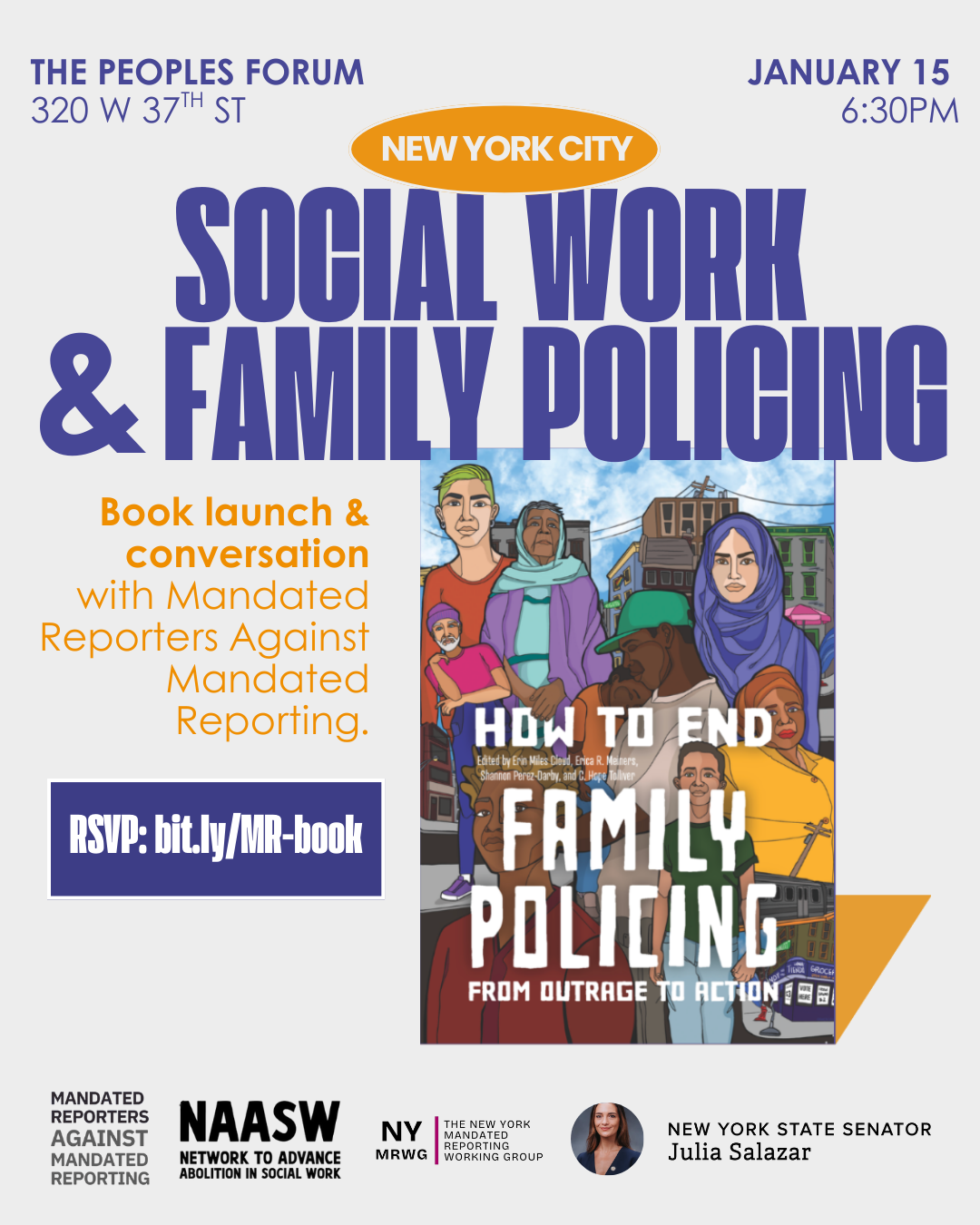
For nearly six years, Mandated Reporters Against Mandated Reporting has been a peer support and organizing space for social workers, social service and mental health workers, and others who are mandated by law to report suspicions of child abuse and neglect to “child protective” services–but who believe this practice does more harm than good.
Mandated Reporters Against Mandated Reporting is excited to invite you to their New York City book launch of How to End Family Policing: From Outrage to Action. The book launch portion of the event will be joined by the Network to Advance Abolition in Social Work (NAASW), the NY Mandated Reporting Working Group, and Cafe Con Libros who will be selling copies of the book.
Location: The People’s Forum, 320 West 37th Street, New York, NY 10018
Date: Thursday, January 15th, 2026
Time: 6:30pm-8:00pm
Thank you for joining us on November 5th for the urgent conversation on Putting Families First: The Other Side of the Reckoning. This gathering, co-sponsored with Graham-Windham, was about envisioning and building a future where families are met with trust and support, not surveillance and punishment. The event centered on reckoning with the harms caused by the family policing systems, particularly the disproportionate impacts on Black,
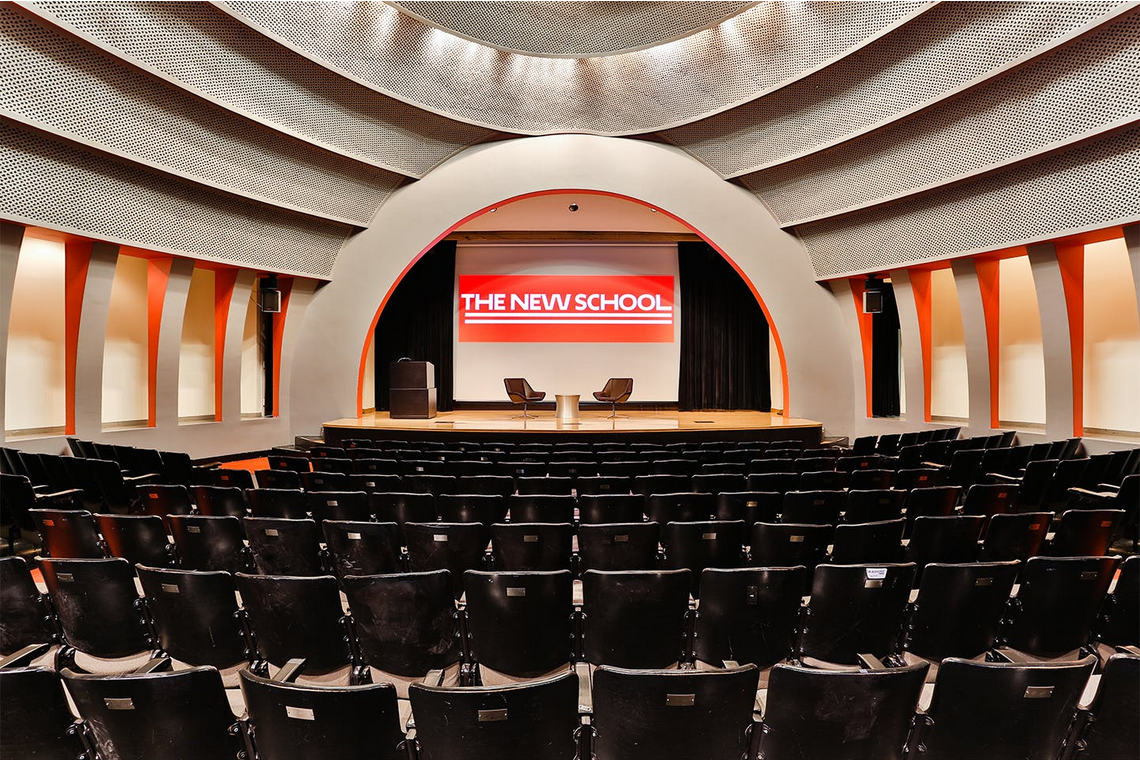
immigrant, and low-income families in New York City. Speakers, many of whom were formerly involved in the system as professionals, foster parents, adoptees, or impacted parents themselves, shared deeply personal stories and reflections on how these systems perpetuate trauma. Several speakers acknowledged their past complicity in family separations, emphasizing the need for repentance, accountability, and transformation within the system.
A recurring theme that emerged was that agencies prioritize procedure, funding, and performance metrics over genuine family well-being. The conversations highlighted calls for radical reform or abolition of the family policing system. The event featured a powerful personal story from Kimberly Watson, a longtime child welfare professional, who described how her own grandchildren were wrongfully removed from their home. The case exposed systemic incompetence, bias, and lack of communication between agencies and families.
The event closed with a collective call for change, centering family voices dismantling punitive structures, and investing directly in communities. The speakers urged policymakers and practitioners to replace surveillance and punishment with trust, healing, and support that will truly strengthen families.
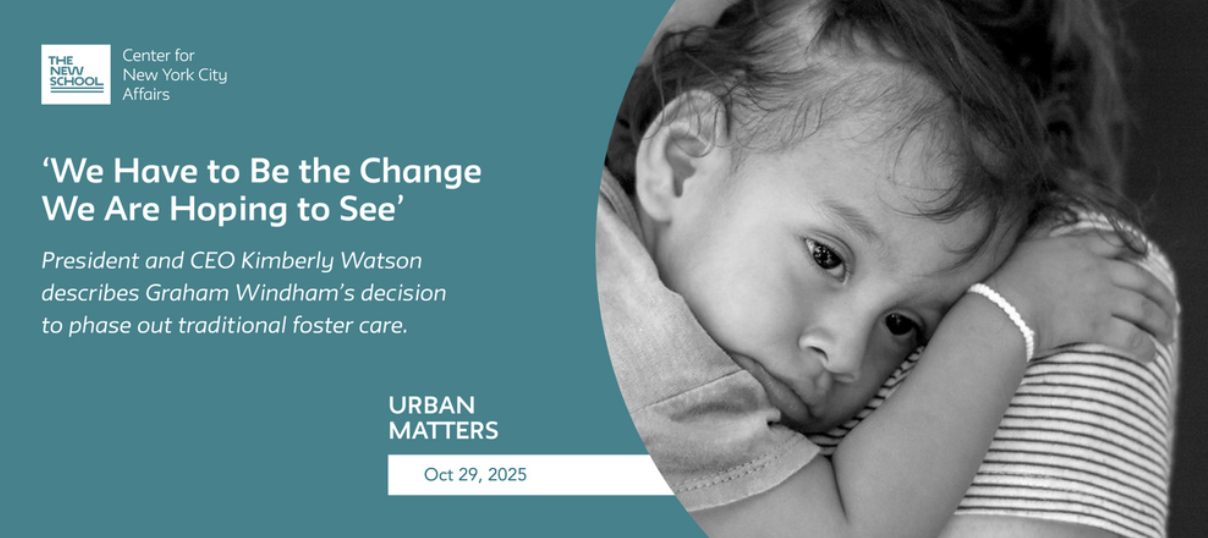
Prior to the Putting Families First: The Other Side of the Reckoning event, Kimberly Watson, President and CEO of Graham Windham spoke with The Center for New York City Affair, Urban Matters. During this interview, Watson discussed the changes the organization is making and their commitment to finding alternatives to foster care, as well as their "Strategic Vision 2029" which details the changes they will be making over the next four years.


Stay informed about our work to critically examine and reform New York City's child welfare system


